The way we communicate online is not that different from communicating offline. It's just people we're talking to. We tend to forget that. As a brand, you should pick a tone of voice that you have when you communicate.
Choosing Your Tone
Are you going to be the person who responds to everything and isn't afraid of showing his opinion? Or are you the person who plays safe and wants to be a nice guy?
Deadmau5: A Case Study
Example: think about Deadmau5. Not a day goes by without him calling out another artist online. This probably fits his personality; otherwise, he won't be doing this consistently, but it's also part of his branding because that's what people know about him. His tone of voice is a strong point of his, which he used for his branding purposes.
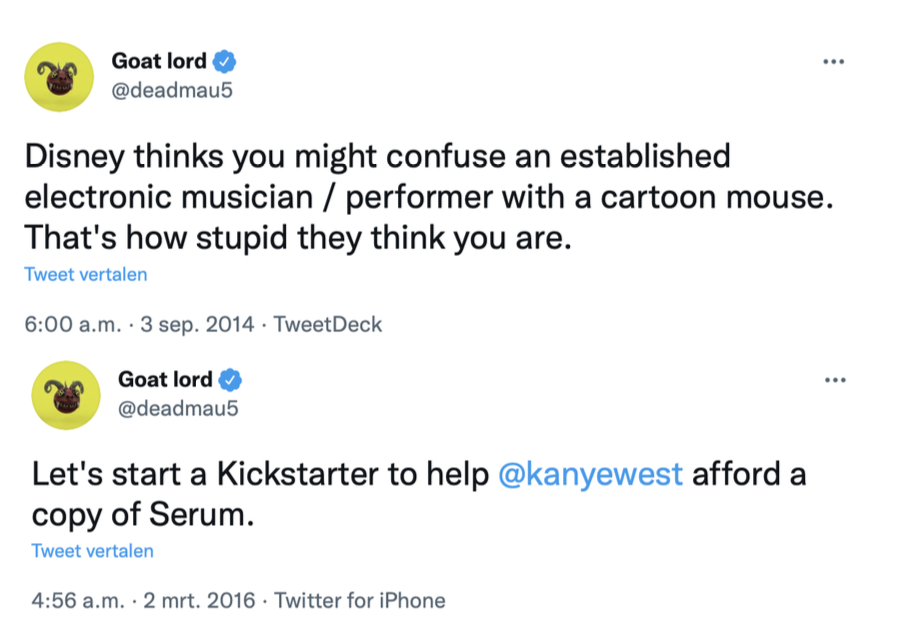
Defining Your Voice
So think about how you want to present yourself as an artist and brand. Also, in communicating to friends online. Everything you post under your artist social media channels is part of your branding.
Voice Characteristics to Consider
- Formal vs. casual
- Serious vs. humorous
- Mysterious vs. transparent
- Professional vs. friendly
- Technical vs. accessible
- Opinionated vs. neutral
- Bold vs. safe
Separating Personal and Professional
Some artists use private and public accounts to keep this separate. This allows you to maintain a personal space while keeping your artist brand consistent and professional.
Consistency is Key
Once you define your voice, use it everywhere: social media, email newsletters, interviews, and website copy. Your tone of voice should be consistent and authentic to you—it's a powerful branding tool when used correctly.